
Initiatives for Carbon Neutrality
Approach and Policy
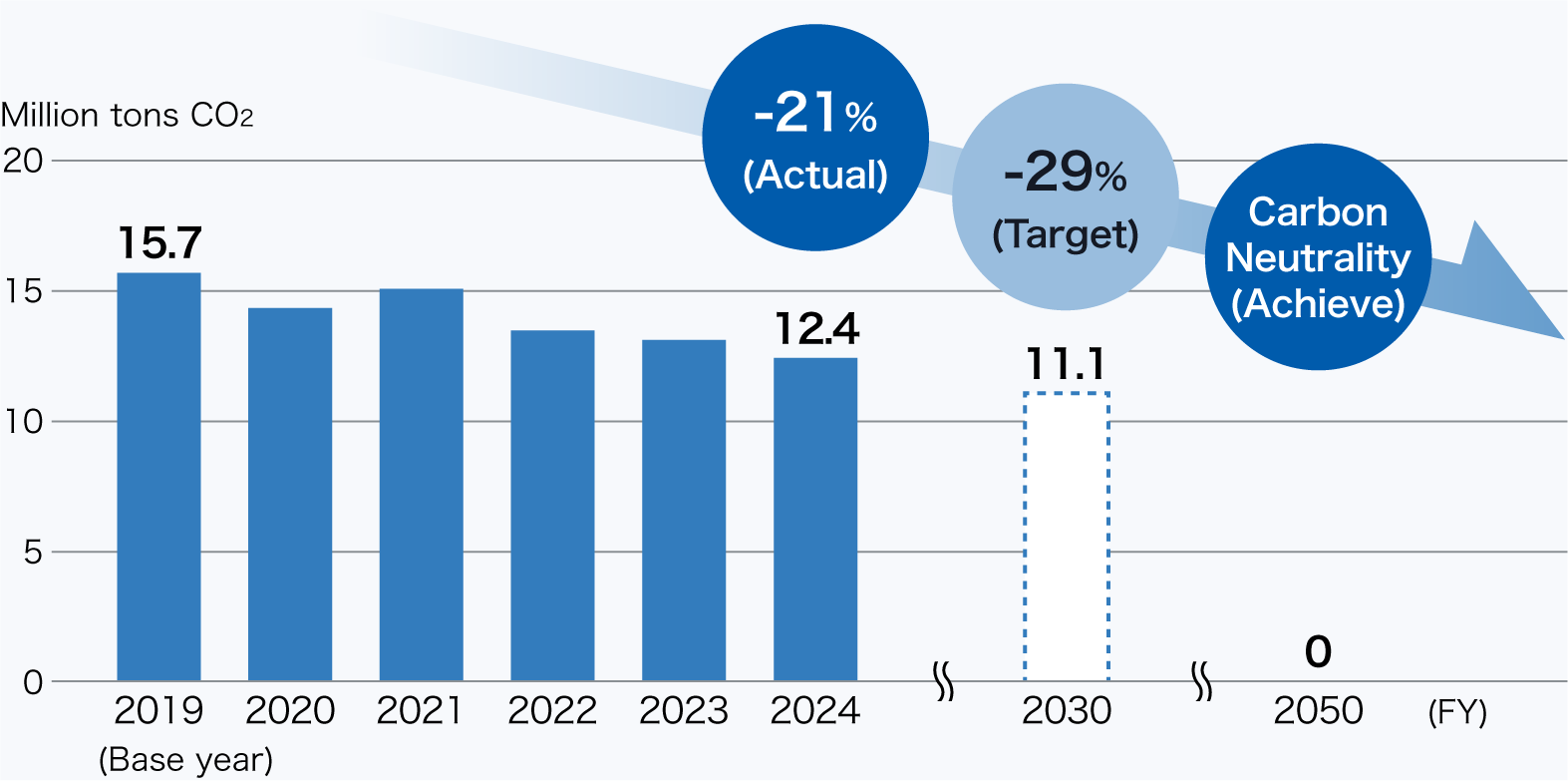
Among the environmental issues the chemical industry faces, the Mitsubishi Chemical Group positions global warming and climate change as the highest priority it must address. Therefore, the Group has been making a concerted effort to reduce GHG (greenhouse gas) emissions for many years. In 2022, we set a target for a 29% reduction in Scope 1 and Scope 2 GHG emissions, which represent our direct and indirect emissions, by fiscal 2030 compared to fiscal 2019, and a further reduction to net zero in 2050 to achieve carbon neutrality. To achieve these targets, in addition to reducing GHG emissions arising from its business activities as a matter of course, the Group is also working to develop products that generate lower GHG emissions when used.
Roadmap to Carbon Neutrality by 2050
In fiscal 2024, our GHG emissions decreased approximately 21% compared to fiscal 2019. Emissions have been steadily decreasing due to the impact of promoting business restructuring and declining capacity utilization rates, as well as efforts to become carbon neutral, such as fuel conversion and process streamlining.
Going forward, we will continue taking action to reduce emissions in line with the roadmap, including fuel conversion and process streamlining, with the aim of achieving our targets.
GHG Emissions and Targets
Reduction Plan up to Fiscal 2030
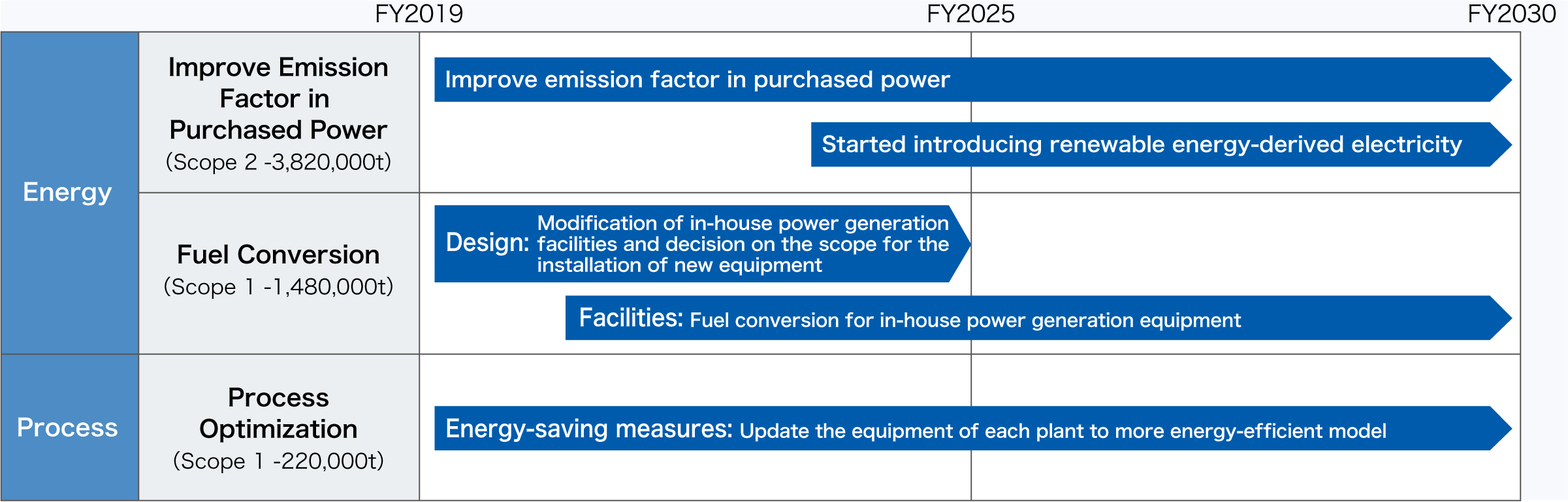
We believe that reducing the emission factor for purchased electricity will make the greatest contribution to achieving our emission reduction target by fiscal 2030. This is based on the introduction of renewable energy sources, along with the reduction in the emission factors being carried out by power companies every year. We plan to secure this supply of renewable energy power ahead of fiscal 2030. Additionally, we are already working on designs for fuel conversion, particularly for coal-fired power plants, and some of these actions are already underway. Furthermore, we are streamlining our manufacturing processes.
Each operating company has introduced an internal carbon pricing (ICP) system as one of the indicators for capital investment, with the aim of promoting capital investment that contributes to the reduction of GHG emissions.
In this manner, we will steadily advance our activities toward achieving our target for 2030, while also introducing and utilizing systems.
Process for Reducing GHG Emissions Ahead of Fiscal 2050
Looking to fiscal 2050, we will maintain our actions up to 2030, while also working on fuel conversion by utilizing hydrogen, ammonia, and e-methane at the appropriate time, reducing process-related emissions by switching raw materials, and CCS*1.
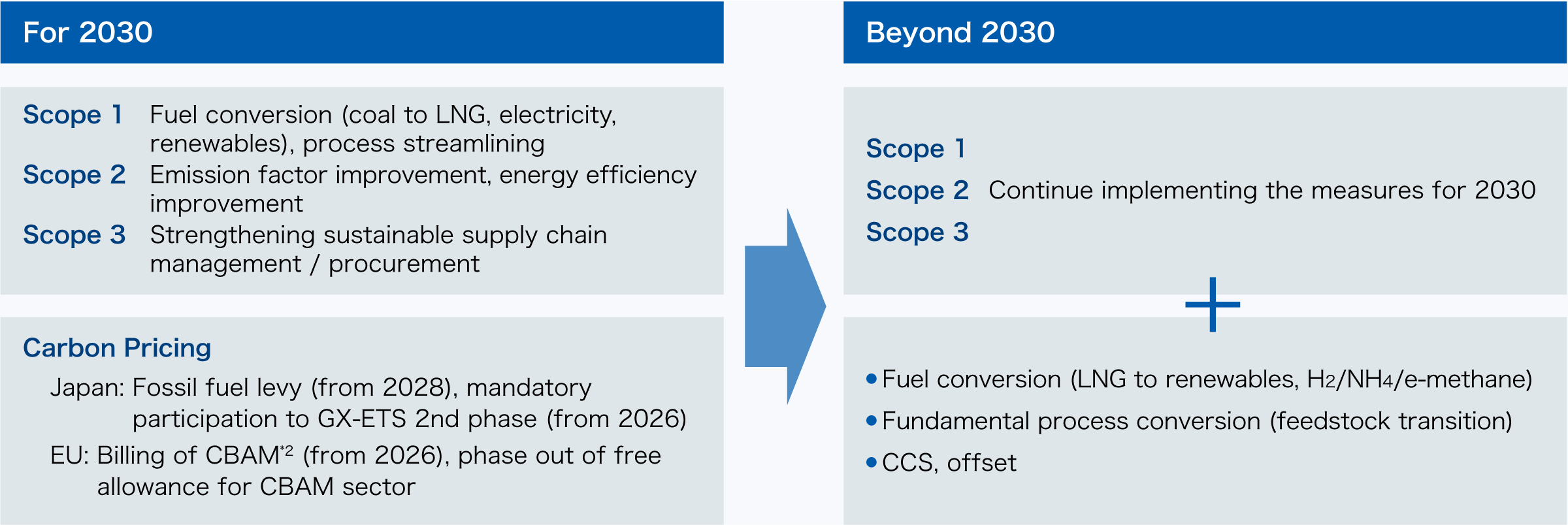
- *1CCS: Carbon dioxide Capture and Storage
- *2Carbon Border Adjustment Mechanism: A system that requires certain cross-border imports from outside the EU to pay the difference between the carbon price inside and outside the EU.
Structure
Under the leadership of the Sustainability Committee, which forms part of our companywide structure for implementing sustainability, we are working to efficiently reduce GHG emissions and achieve carbon neutrality.
Core Measures
Reducing GHG Emissions Arising From Manufacturing
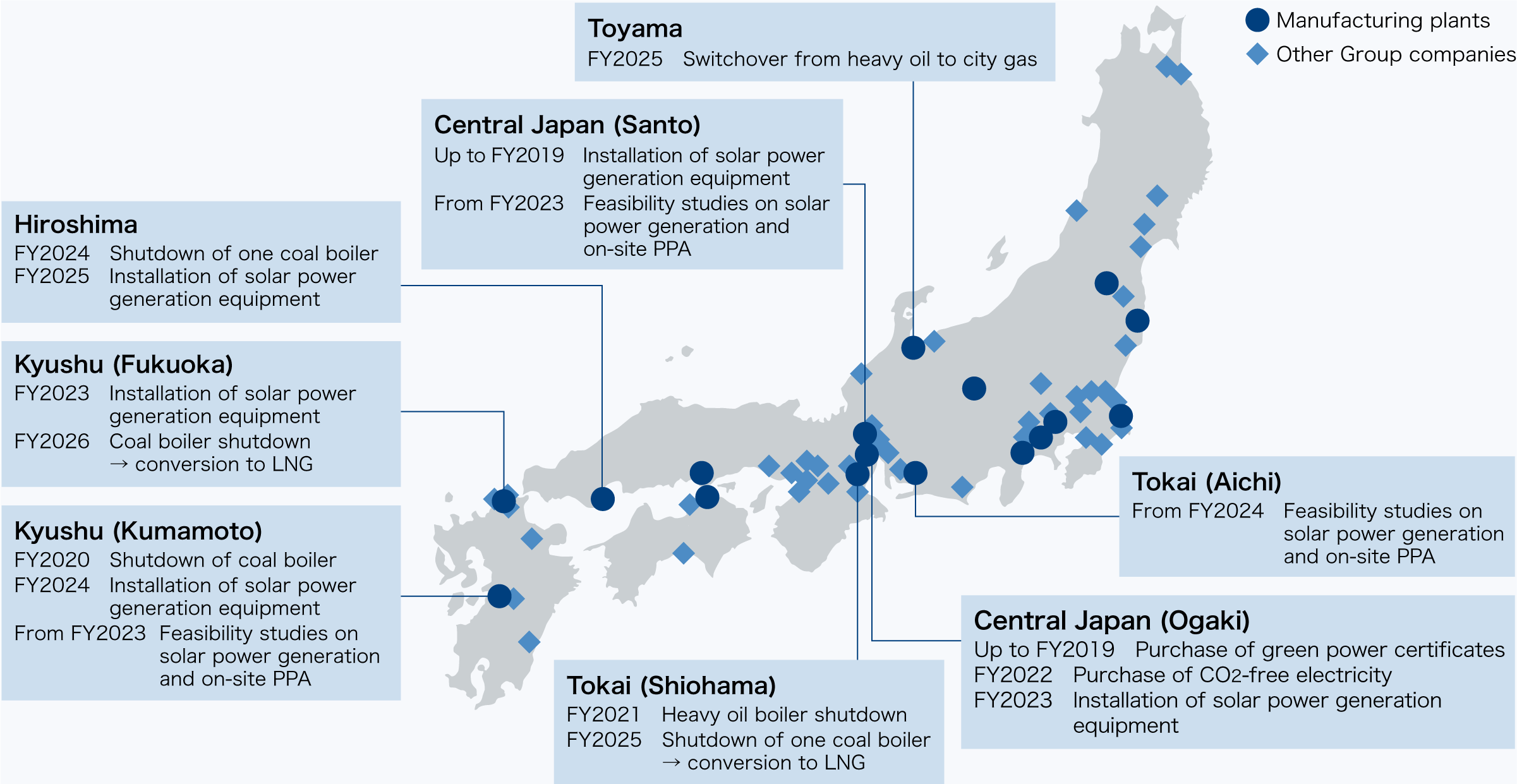
The Mitsubishi Chemical Group is working to reduce GHG emissions associated with manufacturing. For example, Mitsubishi Chemical's business sites are switching to cleaner fuels.
Fuel Conversion Measures at Manufacturing Sites
Reducing GHG Emissions Arising From Logistics
The Mitsubishi Chemical Group aims for eco-efficient logistics. We are optimizing logistics—including product shape and packaging choice—and promoting the improvement of loading ratios and a modal shift to railway freight transport. In addition, the Group is working with logistics companies to reduce GHG emissions by upgrading equipment. For example, this initiative is introducing dedicated ships installed with energy saving devices such as “Friend Fins” and contra-rotating propellers.
Reducing GHG Emissions From Sales Activities
The Mitsubishi Chemical Group is striving to reduce GHG emissions from sales activities by proactively introducing hybrid vehicles into the Group's vehicle fleet, among other measures.
Providing Products that Generate Lower GHG Emissions When Used
Through activities initiated from the research and development stage, the Group is working to launch products that generate lower GHG emissions when used, along with verifying the benefits derived from using these products in terms of reducing the GHG emissions of society as a whole.
Identifying GHG Emissions in the Supply Chain
Mitsubishi Chemical Group Corporation identifies and discloses GHG emissions resulting from the delivery to plants of raw materials purchased, customers' use of products, and the disposal of products. The Mitsubishi Chemical Group began identifying its Scope 3 GHG emissions in Japan and receiving third-party assurance in fiscal 2012.
Promoting Scope 3 Category 1 Reductions at Mitsubishi Chemical
Scope 3 is classified into 15 categories defined by the GHG Protocol, including "upstream" and "downstream" in the supply chain.
Mitsubishi Chemical's Scope 3 GHG emissions total 40,962 thousand t-CO2e, of which Categories 1, 11, and 12 account for approximately 90% of the total (fiscal 2024 results).
As there is a movement toward making Scope 3 target setting mandatory in the future, we plan to reduce Category 1, which has the highest emissions, through supplier engagement.
GHG Emissions in the Supply Chain
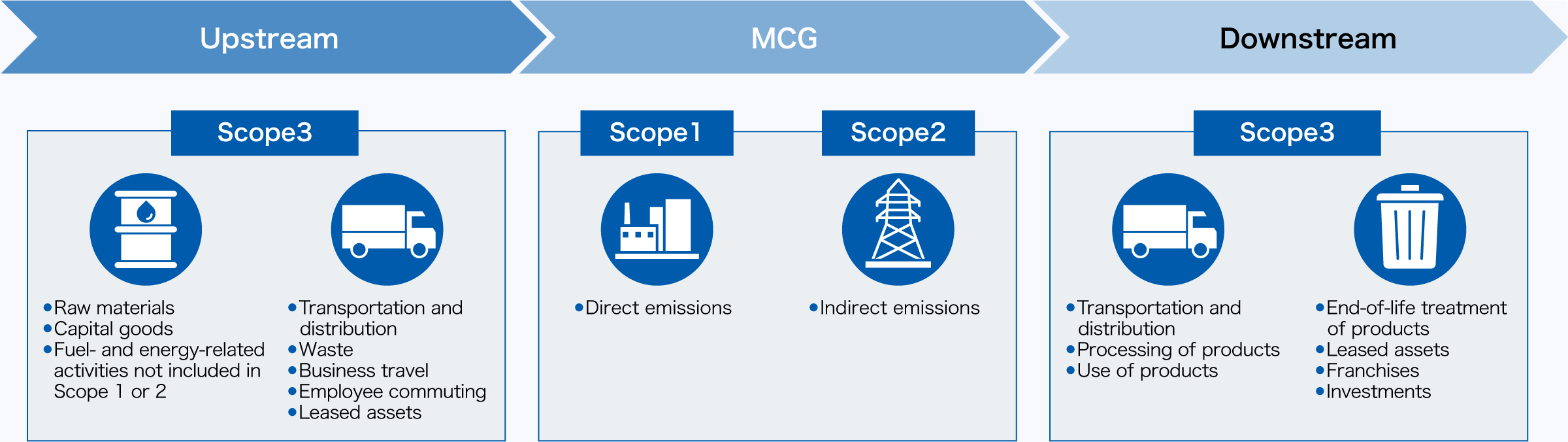
Breakdown of Scope 3 GHG Emissions into 15 Categories Defined by the GHG Protocol (fiscal 2024)
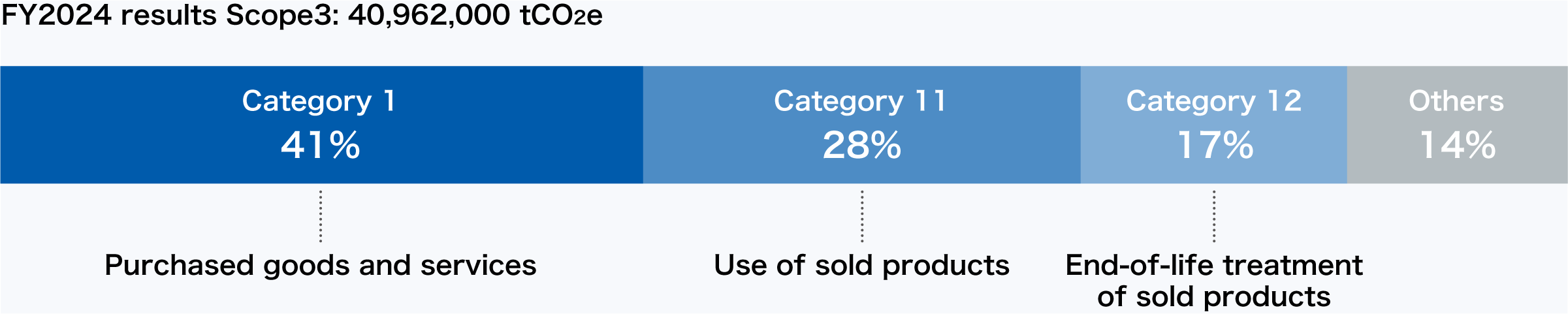
The action plan for reducing Scope 3 Category 1 emissions and sustainable procurement is as follows:
After changing the emissions intensity from the current secondary to primary (supplier-calculated) data, we will share and support the initiatives of our suppliers, aiming to reduce GHG emissions throughout the supply chain.
Step1: Supplier engagement (explaining Scope 3 reduction to suppliers and holding discussions)
Step2: Obtain supplier-calculated data (communicate with suppliers and understand information) ⇒ Consider reduction targets
Step3: Comply with CSRD*3/CSDDD*4 Extraterritorial application outside of the EU
- *3CSRD: Corporate Sustainability Reporting Directive
- *4CSDDD: Corporate Sustainability Due Diligence Directive
Implementation of Carbon Footprint Assessment
The Mitsubishi Chemical Group is implementing a carbon footprint assessment that calculates and discloses GHG emissions for individual products, from raw material purchasing through to delivery to customers.
